
Polk County Directory Collections
The verified Polk County city directory record is precise but incomplete. The Polk County History Center finding guide identifies 1925 and 1926 directories. The Lakeland History Room confirms local city directories on its shelves, but its website does not publish a full year-by-year run. Researchers should call before assuming a particular year, publisher, or city is available.
| Collection | Years | Where Held | Access |
|---|---|---|---|
| Polk city directories | 1925 and 1926 verified | Polk County History Center, Bartow | Onsite; ask research staff |
| Lakeland local directories | Exact shelf run not posted | Lakeland History Room | Onsite; staff research |
| Florida city directory collection | Catalog varies by place | State Library of Florida | Catalog and research request |
| Obituary and death indexes | 1911 to present in three runs | Lakeland History Room | Staff or in-person |
| Sanborn maps | Edition-specific | Library of Congress and local collections | Many public sheets online; some onsite |
No official source reviewed lists a complete publisher run or final printed year. That is a reason to ask the desk, not permission to fill gaps with assumed dates. Search the city actually serving the historic address, because a countywide directory may omit rural residents and a Lakeland volume will not represent every Polk community.
Bartow Holds Polk Directory Years
The Polk County History Center and Historical & Genealogical Library occupies the old courthouse at 100 E. Main Street in Bartow. It opens Tuesday through Saturday, 9 a.m. to 5 p.m., and answers research questions at 863-534-4386. Its noncirculating collections include maps, photographs, manuscripts, tax evidence, newspapers, cemetery material, historical quarterlies, and the verified 1925 and 1926 city directories.
Polk County was created in 1861, while the Historical Commission began collecting in 1937. That timeline explains why the History Center can preserve name evidence outside a modern recorder portal. Its online collection is only a fraction of the material held in Bartow.
Preview the Polk digital collections before a visit.
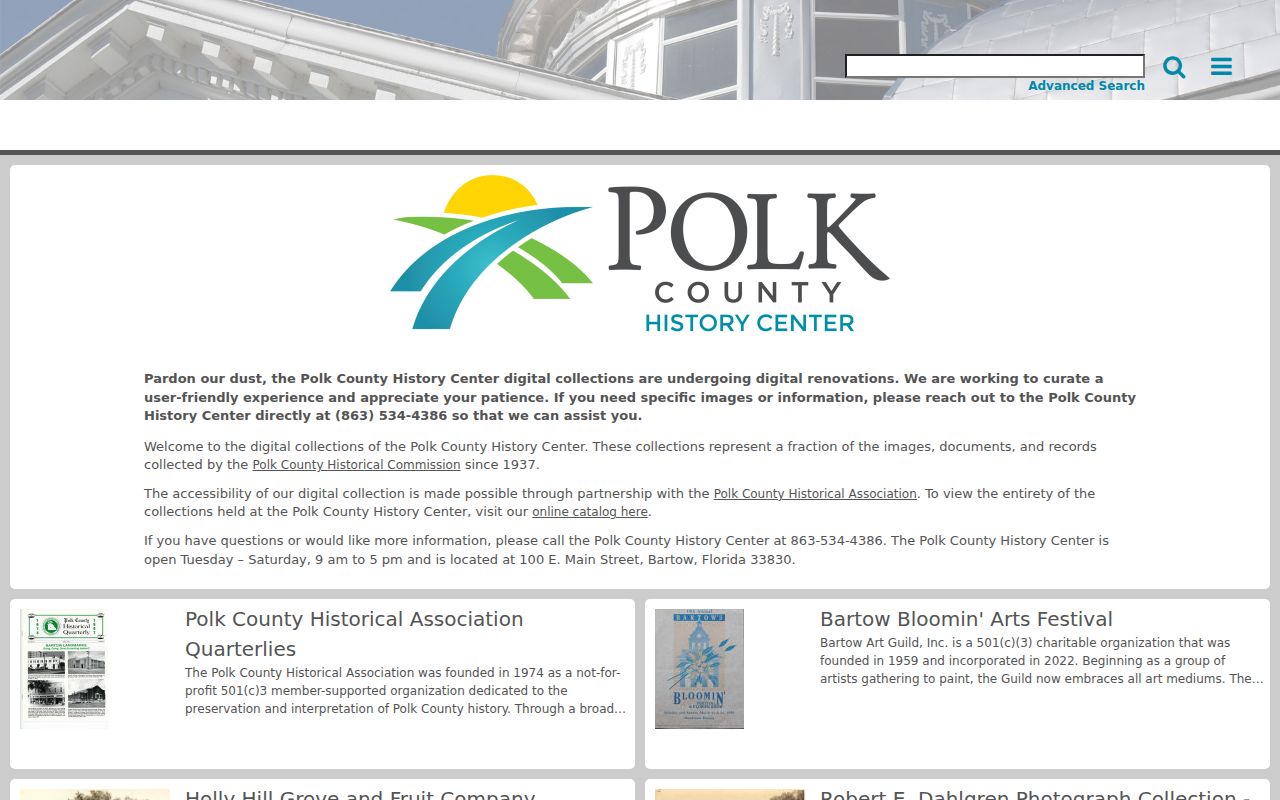
The catalog can identify photographs, documents, and quarterlies that add context to a directory name, though the shelf remains essential.
Lakeland City Directory Research Desk
The Lakeland History Room at 100 Lake Morton Drive offers direct help with city directories, house and property history, genealogy, newspapers, obituaries, yearbooks, maps, building plans, scrapbooks, and photographs. Hours are Monday through Thursday, 9 a.m. to 7 p.m.; Friday and Saturday, 9 a.m. to 5 p.m.; and Sunday, 1:30 to 5 p.m. Call the service desk at 863-834-4284 or the supervisor at 863-834-4269.
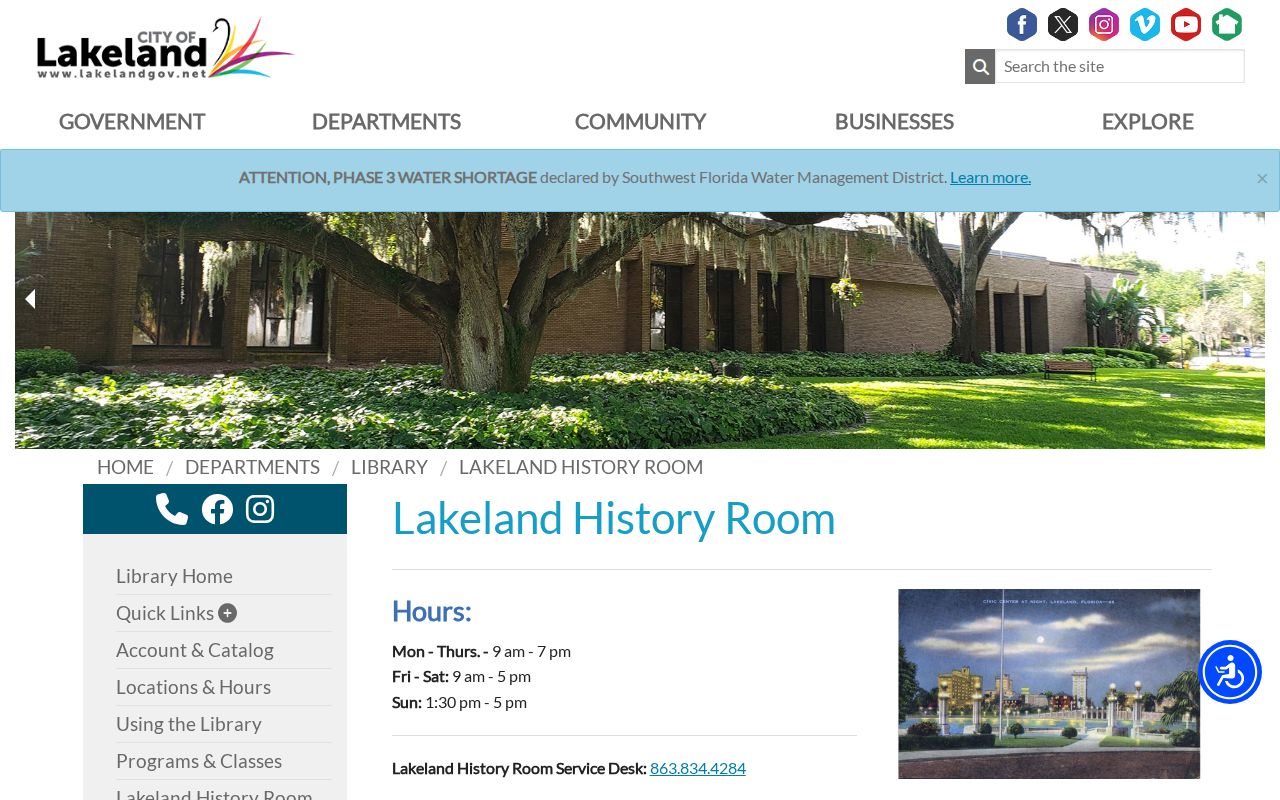
The captured library page confirms that directory work can be paired with staff-assisted house research and the room's broader local sources.
Lakeland also gathers its historic research resources in one official starting point.
That resource list connects city directory clues with preservation files, maps, and the exact local obituary and death-index spans.
Bring the printed name, address variants, a target year, and known relatives. Staff can check shelf-only indexes more efficiently than an open-ended request. A Polk County Library Cooperative card also works across participating municipal libraries.
Read a Polk Directory Entry
A local-era city directory entry may compress a full household clue into one line. Copy it exactly before expanding any abbreviation. The inspected official sources did not expose a scanned Polk sample page, so every symbol must be checked against the key printed in the chosen volume.
| Name | Indexed surname, given name or initials, and title |
|---|---|
| Spouse | A spouse may appear in parentheses or beside the householder |
| Work notation | Occupation and sometimes business or workplace name |
| Address | House number, street, and possibly boarding or residence marks |
| Status marks | Possible homeowner or widow notation, defined by that volume's key |
- Criss-cross directory
- A section ordered by street and ascending house number.
- Householder index
- An index centered on the person associated with a household address.
- Abbreviation key
- The volume's own legend for shortened names, status, work, and address terms.
An occupation can help separate two people with the same name, but it should be read as dated historical context. A widow notation can guide an obituary or death-index search. Owner marks, where present, still need confirmation in tax or deed records.
Statewide City Directory Catalog
The State Library of Florida city directory collection is a second catalog and research route when a local year is absent. Search by the municipality tied to the old address and ask whether access is onsite, on microfilm, or through another repository.
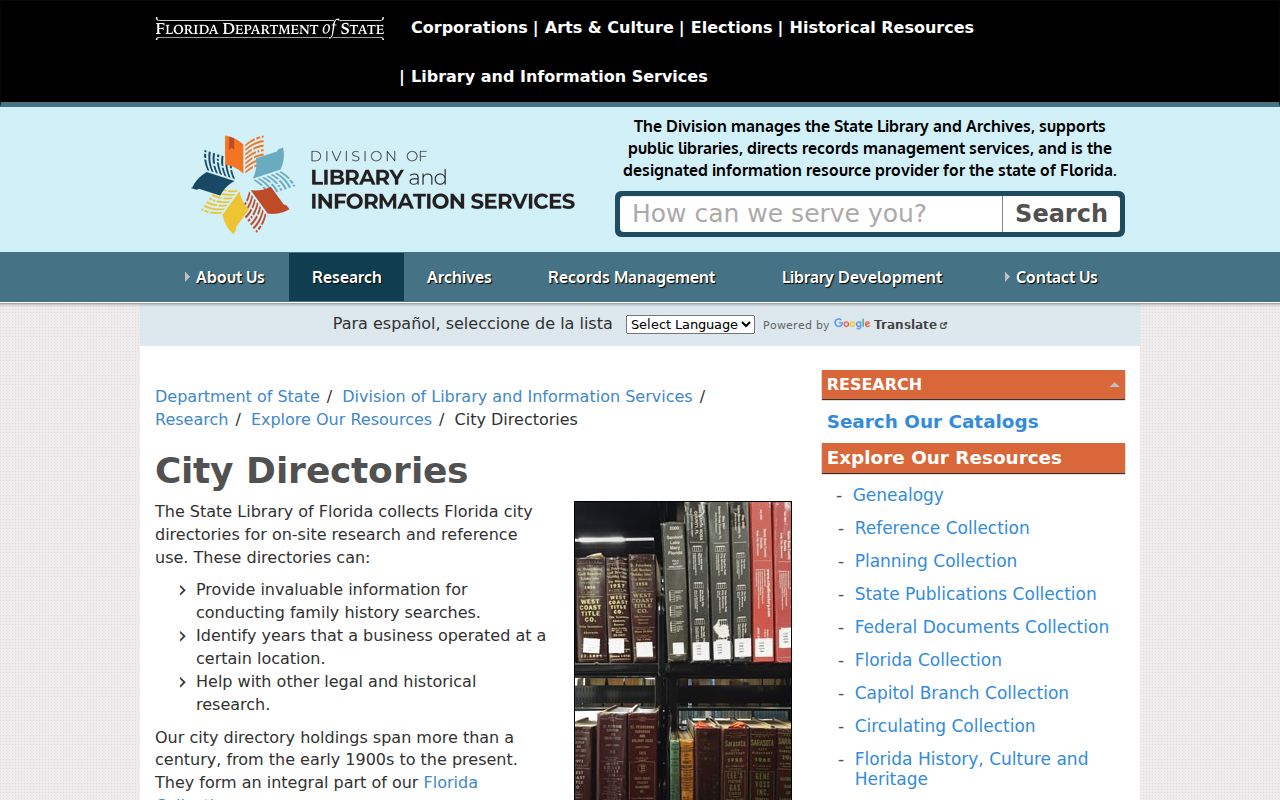
The state collection broadens the hunt beyond one Polk shelf while preserving the need to verify the exact place and year.
Polk Directories Meet Obituaries
Lakeland's local indexes form an unusually steady bridge. The Ledger obituary index covers 1911 through 1975 and 1999 to the present. A Polk County death index fills 1975 through 1998. Together, they can connect a city directory resident to relatives, a former address, a cemetery, and civic organizations.
Use the directory's spelling, spouse, and address to choose the right obituary entry. Then verify dates through death certification, cemetery records, probate, or deeds. The History Room also holds records of the DAR, Sorosis Club, Woman's Club, Historic Lakeland, and personal papers tied to named local families.
Polk Directory Clues in Images
Lakeland's digital collection contains more than 8,000 images. Photographs do not replace a city directory entry, but they can show a street, building, civic group, or business linked to the printed name. Search the exact spelling first, then test initials, spouse names, organizations, and address variants. Keep the catalog description and image date with any identification.
The History Room also offers free in-library access to Ancestry for patrons and leads biographical “Stories and Stones” walks through Roselawn, Tigers Flowers, and Lake View cemeteries. Those sources add context. Dates and relationships should still be confirmed through a directory, vital record, cemetery register, probate file, or deed.
Map Polk Directory Addresses
Sanborn fire-insurance maps document building footprints, use, construction, outbuildings, street names, and numbering. They do not name residents. Attach a household with a city directory first, then use a map to understand the site and deeds or permits to date physical change.
The Library of Congress Sanborn guide explains catalog searching for Lakeland, Winter Haven, and other incorporated places.
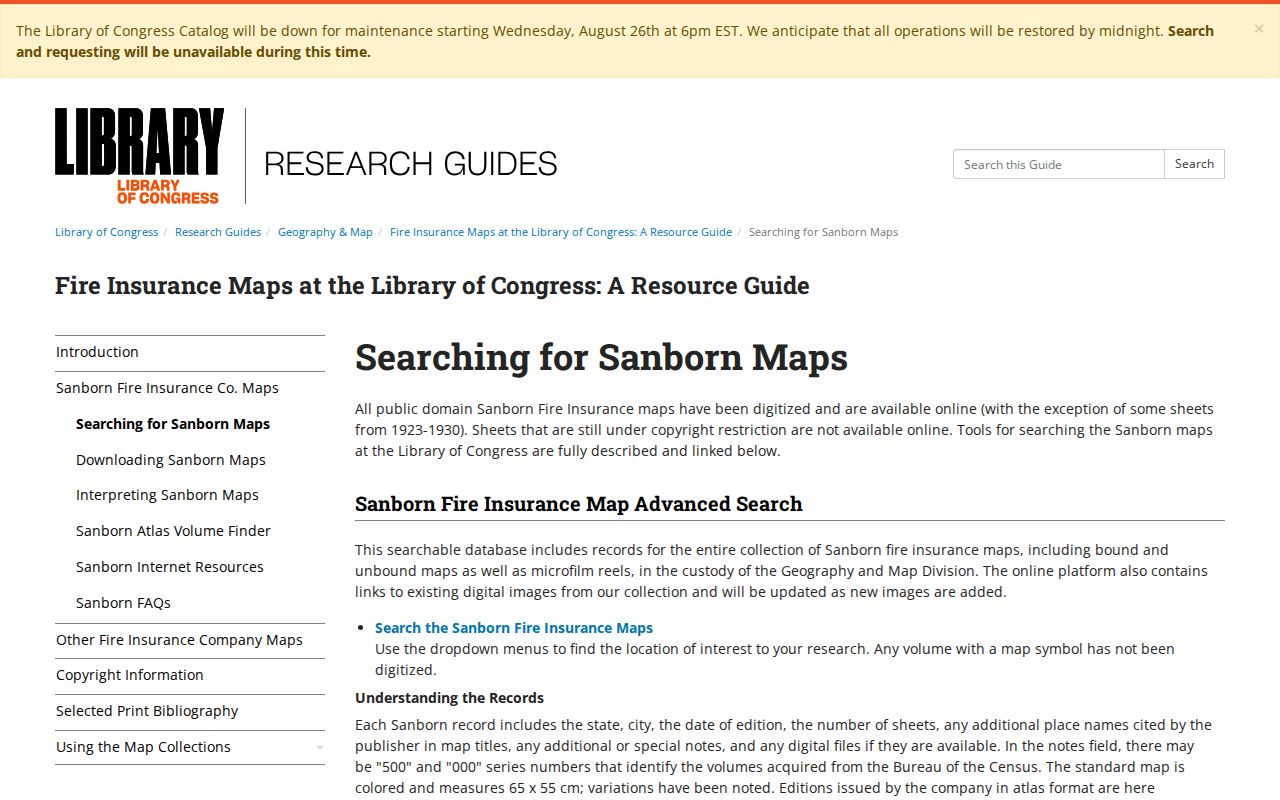
Most public-domain sheets are digitized, though some 1923 through 1930 sheets may require a reading room or licensed local database.
Historic Polk Place Names Shift
Lakeland was platted in 1884 and incorporated in 1885. Its growth in the 1920s makes the verified 1925 and 1926 volumes especially useful beside the 1920 and 1930 censuses. Yet today's map labels cannot always decode an old listing. Historic Acton, near Lake Parker, had vanished by 1906. Highland Park, Highland City, and Highlands County are separate places, while Polk City is a municipality within Polk County.
Preserve the place name as printed. Search old maps, plats, newspapers, and census enumeration geography before translating it to a current municipality. The county's lakes, rural communities, and changing postal labels make that step essential.
Rural Polk Beyond City Directories
A city directory was built around a municipality's canvassed streets. Families on citrus groves, near phosphate communities, or in scattered county settlements may never appear. South and east Polk often require more reliance on tax rolls, deeds, census schedules, cemeteries, church records, and local newspapers. Winter Haven and other municipal libraries may also hold local papers or directories not duplicated online.
Start with the parcel's legal description when an old road name fails. Historical tax evidence can establish the owner, the census can describe the household, and a cemetery or obituary can link relatives. Railroad, citrus, phosphate, tourism, and retirement records may explain why a person appears under a company, civic group, or community name instead of a familiar street.
For northeast Polk, test both the postal place and the true municipality or unincorporated jurisdiction. For an old Lakeland reference, account for vanished Acton and changes near Lake Parker. This fallback chain is more reliable than forcing a rural family into a city directory that never covered the address.
Trace Families Through Polk Directories
A Polk County city directory is strongest as one dated point in a timeline. Start with the volume nearest a known event, then move both forward and backward. Write down the source year beside each fact so a later household is never presented as current.
- Choose the city serving the historic address and the nearest available directory year.
- Read both the alphabetical listing and any street or criss-cross section. Copy spelling, spouse, work notation, and address exactly.
- Check the prior and next available volumes. The last old address and first new one bracket a likely move.
- Pair 1925 and 1926 entries with the 1920 and 1930 censuses, then add tax rolls, deeds, and newspaper notices.
- Close a disappearance with the obituary and death indexes, cemetery evidence, probate, or a later deed.
Absence does not prove departure. A person may have moved, died, been missed by a canvass, changed a surname, lived beyond the directory boundary, or appeared under initials. Rural Polk families often require a replacement stack of historical tax rolls, legal descriptions, census schedules, church or cemetery records, and local newspapers.